2015 was a hinge year for modern shogi. The traditional title system stayed fierce, with Yoshiharu Habu and Akira Watanabe at the center, while the computer shogi wave that had defined the early 2010s reached a turning point after Denousen FINAL. At the same time, a new event, the Eiou tournament, opened a fresh lane that would soon become a full title match.
2014 was a hinge year in professional shogi. Yoshiharu Habu regained the Meijin title in decisive fashion, while Tetsuro Itodani broke through at the end of the year to take the Ryuo and announce a generational shift.
2013 was the year the top of professional shogi compressed into a very small circle. Toshiyuki Moriuchi, Yoshiharu Habu, and Akira Watanabe split the major narrative between them, and several title matches were decided only after sustained pressure rather than one-sided dominance.
2012 was a transitional year for modern shogi. The established title holders still dominated the major seven title matches, but the conversation around the game was also being reshaped by computer shogi, especially the early Denou-sen events.
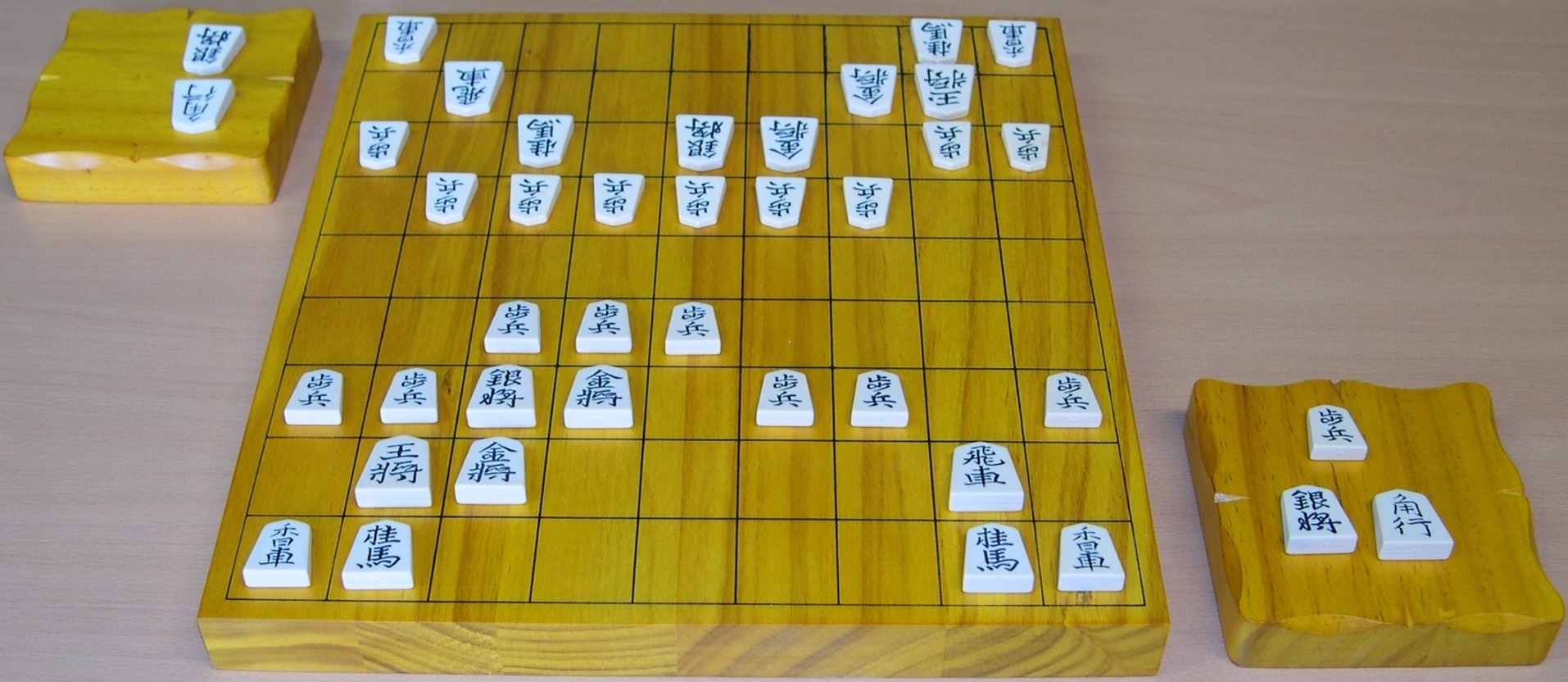
Shogi board and pieces. Photo by Tamago915, via Wikimedia Commons. License: CC BY-SA 3.0.
2011 was a year of intense title fights, with Toshiyuki Moriuchi taking the Meijin from Yoshiharu Habu, while Akira Watanabe and Habu traded major crowns. It was also the year of the Great East Japan Earthquake, and shogi events found ways to continue and support affected regions.
2010 was a year of strong title defenses by Yoshiharu Habu and Akira Watanabe, and it also produced a new champion: Akihito Hirose won his first major title by taking the Oi. Here is a quick, source-backed tour of the biggest professional and women’s shogi highlights of the year.
In 2009, the modern shogi title scene featured dramatic seven game finishes in the Meijin and Oi, and a dominant sweep in the Ryuo. Below is a compact English recap of the year, with Japanese sources for readers who want to dig deeper.
Shogi board pieces and komadai. Source: Wikimedia Commons, File:Shogi_board_pieces_and_komadai.jpg. Author: Oliver Orschiedt. License: CC BY-SA 3.0.
For Japanese professional shogi, 2008 is remembered for two things above all: Yoshiharu Habu regaining the Meijin title (and securing the 19th lifetime Meijin qualification), and Akira Watanabe producing one of the most dramatic comebacks in modern title match history to defend the Ryuo crown.
Shogi board, pieces, and komadai. Source: Wikimedia Commons, File:Shogi_board_pieces_and_komadai.jpg. Author: Oliver Orschiedt. License: CC BY-SA 3.0.
1. The biggest story: the 21st Ryuo match and Watanabe’s comeback
The 21st Ryuo (2008 season) became famous for both its international setting and its reversal of fortune. Game 1 was played in Paris, and the title match itself turned into a rare “from 0-3 down” comeback: Ryuo Akira Watanabe lost the first three games to challenger (and Meijin) Yoshiharu Habu, then won four straight to take the match 4-3. With his 5th consecutive Ryuo defense, Watanabe also obtained the qualification for lifetime Ryuo (eisei Ryuo).
Ryuo match result: Watanabe 4-3 Habu (after trailing 0-3).
Notable detail: Game 1 was held in Paris.
2. Major title matches and champions (2008 season)
Several of the year’s biggest matches centered on Habu, who appeared repeatedly in title fights while also reclaiming Meijin. Here are a few key results from the major titles that concluded during the 2008 season.
Meijin: Yoshiharu Habu defeated Toshiyuki Moriuchi 4-2 to take the Meijin title (and obtained the 19th lifetime Meijin qualification).
Ryuo: Akira Watanabe defended against Yoshiharu Habu 4-3.
O-i (Oi): Koichi Fukaura defended against Yoshiharu Habu 4-3.
Oza: Yoshiharu Habu defended against Kazuki Kimura 3-0.
Kisei: Yoshiharu Habu took the title from Yasumitsu Sato 3-2.
3. Computer shogi: Gekisashi wins the World Computer Shogi Championship
In computer shogi, the World Computer Shogi Championship (WCSC) continued to be a major annual benchmark. The 18th tournament (2008) was won by Gekisashi (激指), with Tanase Shogi (棚瀬将棋) in second and Bonanza in third.
A shogi board with pieces and komadai. Source: Wikimedia Commons, File:Shogi_board_pieces_and_komadai.jpg. Author: Oliver Orschiedt. License: CC BY-SA 3.0.
In the 2007 shogi season (April 2007 to March 2008), the title picture mixed long running dynasties with a few sharp turning points: Toshiyuki Moriuchi kept the Meijin, Akira Watanabe continued his early run as Ryuo, and Koichi Fukaura captured his first major title by taking the Oi from Yoshiharu Habu. (more…)
2006 was a year of familiar giants and a few clear signals of what would come next. Toshiyuki Moriuchi kept the Meijin crown, Yoshiharu Habu continued to pile up long-running title streaks, Yasuhiro Sato (Yasumitsu) collected trophies across multiple fronts, and Akira Watanabe’s Ryuo reign continued.