Shōgi Zatsuwa (将棋雑話 or “Shogi Chatter”) is like a fun “shogi story-time” book. It’s a set of short essays by Kōda Rohan, a famous Japanese writer. Instead of teaching you exact moves, he chats about shogi’s world: why one king piece says 王 and the other says 玉, famous players from the past, wild match stories, different kinds of shogi, and even the “official” size of the board. It feels a bit like reading old-school trivia mixed with gossip from the shogi club. (more…)
Popular Links
-
Shogi 2025 in Review
By Galo S Mirth
2025 was another dense year in shogi. The title scene stayed intense, but the year also brought major structural and cultural changes, from prize-money realignment to women’s-title milestones and new records by younger players and non-professionals. This review highlights the most important developments from the Japanese shogi world across the 2025 calendar year.
-
A Folk Tale About the “Jade General” (玉將につきての俗説)
By Japanese author Koda Rohan, from his essay collection Shogi Zatsuwa, section 4, 「玉将につきての俗説」 (“Folk Beliefs About the King Piece”). This short essay discusses traditions around the shogi king. (more…)
-
The Letters on the Pieces (馬子の文字)
Kōda Rohan wrote this shogi essay about shogi-piece calligraphy in January 1901 for Taiyō magazine; it later appeared as Section 3 of his collection Shōgi Zatsuwa. (more…)
-
King and Jade (王と玉と)
Ō and Gyoku (王と玉と)
Kōda Rohan wrote this as Section 2 of his shogi essay collection Shōgi Zatsuwa (将棋雑話, often “Shogi Chatter”). It is known as 王と玉と (Ō and Gyoku / King and Jade). The short shogi essay discusses the history of the shogi king piece. (more…)
-
A Lance Banner and a Brave Warrior (香車の差物と勇士と)
Written by Kōda Rohan, from his shogi essay collection Shōgi Zatsuwa (“Shogi Chatter”). The topic is the use of the name of Shogi lance in historical settings. (more…)
-
Shogi Club 24 Is Closing: The Story of the Internet Dojo That Shaped Modern Shogi
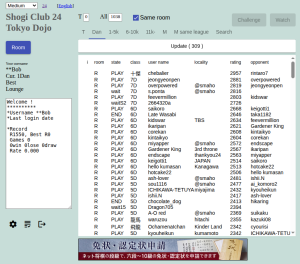
If you’ve ever played shogi online, there’s a good chance you’ve heard of Shogi Club 24, also called “24”, or “ni-yon” in Japan. It’s the plain-looking site that still manages to feel like a real dojo: serious games, strong opponents, and a rating that people actually respect. It also has 300,000+ registered members, and you can register and play for free.
And now for the part that makes your stomach drop, …
Shogi Club 24 is scheduled to shut down on December 31, 2025.
Yes. That Shogi Club 24–the one that helped shape online shogi for more than two decades–is about to become history. (more…)
-
One Illegal Move and It’s Over: Instant-Loss Violations in Shogi (反則負け)
Shogi is one of the most forgiving strategy games ever… and also one of the strictest.
Forgiving, because you can bring captured pieces back into the game. Strict, because one illegal move can end your game on the spot.
In Japanese, an instant-loss violation is usually talked about as 反則負け (hansoku-make), or the “loss by foul.” The Japan Shogi Association (日本将棋連盟) even has a full list of actions that count as “you lose immediately.”
Today, let’s walk through:
- what “instant-loss” really means in shogi,
- how these rules got here (a little history),
- and some famous “oops” moments, because yes, even pros do this.
-
The Nifu Rule: Why You Can’t Drop Two Pawns in One Column (and How That Rule Got Here)
If you’ve played even a few games of shogi, you’ve probably heard someone say “nifu!” in a slightly panicked voice.
Maybe it happened to you. You’re feeling clever. You have a pawn in hand. You see a good square. You drop it… and then the game ends right there because it’s illegal.
That’s rough. So today I want to talk about the nifu rule, including what it is, why it matters, and the coolest part: how far back we can trace it in shogi history using Japanese sources.
And yes, we’ll also look at a few “pawn-related” rules that are basically nifu’s cousins. (more…)
-
Shogi Rules (Japanese Chess): A Friendly, No-Stress Guide
If you’ve ever played chess and thought, “This is fun, but what if my captured pieces could come back and help me?” …then welcome to shogi.
Shogi is often called Japanese chess, but it has one big twist that makes it feel totally different: when you capture an opponent’s piece, it becomes yours and you can drop it back onto the board later. That one rule creates a lot of cool surprises.
Let’s walk through the rules in a simple, easy way. (more…)