For shogi fans, 2023 felt like one of those years when the whole map of the game shifts. The headline was Sota Fujii completing the eight-title sweep by taking the Oza title in October, but the year also had major title-match stories, women’s title momentum, and a strong sense that shogi’s public presence kept growing.
This review highlights the biggest developments in professional and cultural terms, with links to Japanese primary sources.
2021 was the year shogi’s center of gravity shifted. Sota Fujii did not just win. He changed the shape of the title map, taking the Ryuo crown and becoming the youngest ever four-crown holder. At the same time, women’s shogi entered a new era with the launch of the Hakurei title system and its rank league.
2018 was one of the most eventful years in modern shogi. The title map changed repeatedly, a long run of one-crown holders returned for the first time in decades, and new names took major stages in both men’s and women’s title events. It was also a year when online broadcasting and pop culture ties made shogi more visible to general audiences.
Shogi in 2017 is remembered for two huge stories. First, Fujii Sota’s 29 game winning streak became a national headline and brought many new fans into the game. Second, Habu Yoshiharu won the 30th Ryuo title match and completed the first ever Eisei 7 crown achievement. It was a year where a new generation arrived while a historic champion reached a peak milestone.
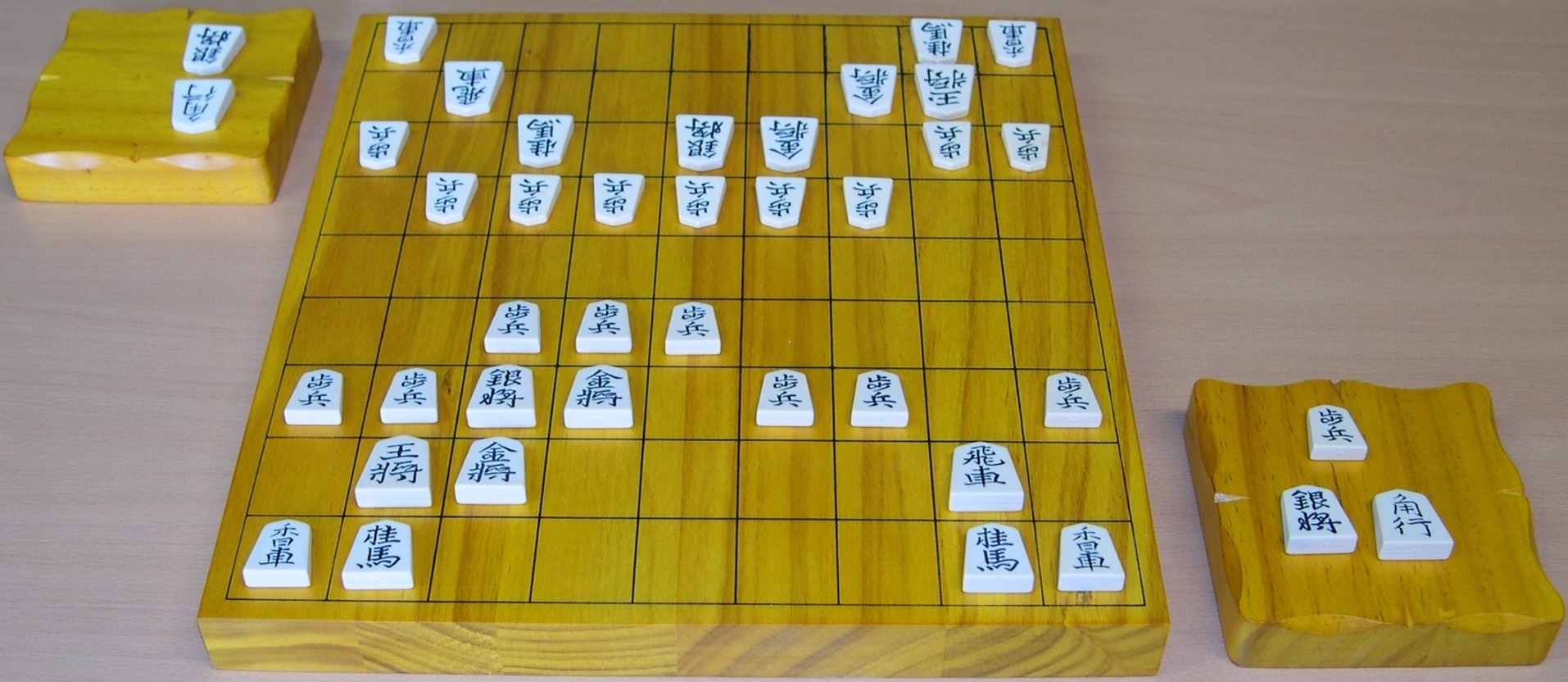
Shogi board and pieces. Photo by Tamago915, via Wikimedia Commons. License: CC BY-SA 3.0.
2011 was a year of intense title fights, with Toshiyuki Moriuchi taking the Meijin from Yoshiharu Habu, while Akira Watanabe and Habu traded major crowns. It was also the year of the Great East Japan Earthquake, and shogi events found ways to continue and support affected regions.
In 2009, the modern shogi title scene featured dramatic seven game finishes in the Meijin and Oi, and a dominant sweep in the Ryuo. Below is a compact English recap of the year, with Japanese sources for readers who want to dig deeper.
Shogi board pieces and komadai. Source: Wikimedia Commons, File:Shogi_board_pieces_and_komadai.jpg. Author: Oliver Orschiedt. License: CC BY-SA 3.0.
For Japanese professional shogi, 2008 is remembered for two things above all: Yoshiharu Habu regaining the Meijin title (and securing the 19th lifetime Meijin qualification), and Akira Watanabe producing one of the most dramatic comebacks in modern title match history to defend the Ryuo crown.
Shogi board, pieces, and komadai. Source: Wikimedia Commons, File:Shogi_board_pieces_and_komadai.jpg. Author: Oliver Orschiedt. License: CC BY-SA 3.0.
1. The biggest story: the 21st Ryuo match and Watanabe’s comeback
The 21st Ryuo (2008 season) became famous for both its international setting and its reversal of fortune. Game 1 was played in Paris, and the title match itself turned into a rare “from 0-3 down” comeback: Ryuo Akira Watanabe lost the first three games to challenger (and Meijin) Yoshiharu Habu, then won four straight to take the match 4-3. With his 5th consecutive Ryuo defense, Watanabe also obtained the qualification for lifetime Ryuo (eisei Ryuo).
Ryuo match result: Watanabe 4-3 Habu (after trailing 0-3).
Notable detail: Game 1 was held in Paris.
2. Major title matches and champions (2008 season)
Several of the year’s biggest matches centered on Habu, who appeared repeatedly in title fights while also reclaiming Meijin. Here are a few key results from the major titles that concluded during the 2008 season.
Meijin: Yoshiharu Habu defeated Toshiyuki Moriuchi 4-2 to take the Meijin title (and obtained the 19th lifetime Meijin qualification).
Ryuo: Akira Watanabe defended against Yoshiharu Habu 4-3.
O-i (Oi): Koichi Fukaura defended against Yoshiharu Habu 4-3.
Oza: Yoshiharu Habu defended against Kazuki Kimura 3-0.
Kisei: Yoshiharu Habu took the title from Yasumitsu Sato 3-2.
3. Computer shogi: Gekisashi wins the World Computer Shogi Championship
In computer shogi, the World Computer Shogi Championship (WCSC) continued to be a major annual benchmark. The 18th tournament (2008) was won by Gekisashi (激指), with Tanase Shogi (棚瀬将棋) in second and Bonanza in third.
A shogi board with pieces and komadai. Source: Wikimedia Commons, File:Shogi_board_pieces_and_komadai.jpg. Author: Oliver Orschiedt. License: CC BY-SA 3.0.
In the 2007 shogi season (April 2007 to March 2008), the title picture mixed long running dynasties with a few sharp turning points: Toshiyuki Moriuchi kept the Meijin, Akira Watanabe continued his early run as Ryuo, and Koichi Fukaura captured his first major title by taking the Oi from Yoshiharu Habu. (more…)
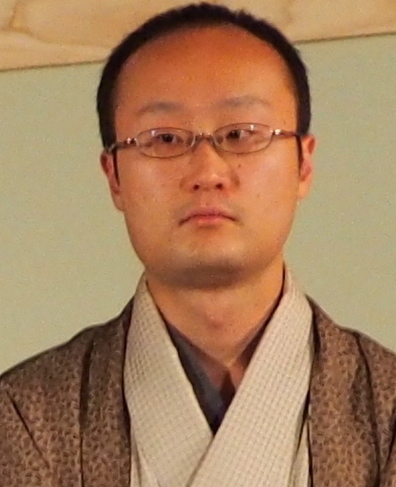
Akira Watanabe (渡辺明), who won his first Ryūō title in the 17th Ryūō-sen (2004). Source: Wikimedia Commons, File:Akira_Watanabe.jpg. Author: nakashi. License: CC BY-SA 2.0. (Image originally from Flickr; cropped version on Commons.)
Shogi in 2004 was a year of shifting generations. Toshiyuki Moriuchi took the Meijin title back from Yoshiharu Habu, but the headline story at year’s end was a new name at the very top: Akira Watanabe captured the Ryūō crown for the first time.
Below is a compact, source-backed tour of the year’s biggest title matches and several other notable results (including women’s titles). The dates in the Japanese sources are written in “2004年度” terms (roughly April 2004 to March 2005), but the main title series listed here were played across 2004.
1. Major title matches (2004)
62nd Meijin (第62期名人戦): Toshiyuki Moriuchi (森内俊之) defeated Meijin Yoshiharu Habu (羽生善治) 4-2 and became Meijin again (2nd time overall).
75th Kisei (第75期棋聖戦): Yasumitsu Satō (佐藤康光) defended the Kisei title against Moriuchi 3-0.
45th Ōi (第45期王位戦): Habu won the Ōi title, defeating Kōji Tanigawa (谷川浩司) 4-1.
52nd Ōza (第52期王座戦): Habu defended the Ōza title against Moriuchi 3-1 (continuing his long Ōza run).
17th Ryūō (第17期竜王戦): Akira Watanabe (渡辺明) defeated Ryūō Moriuchi 4-3 to win his first major title.
Even from just these results, the year’s narrative is clear: Moriuchi rose to the top with the Meijin, Habu remained a constant force (Ōi and Ōza), and Watanabe’s Ryūō breakthrough opened a new chapter.
Other notable tournament results
22nd Asahi Open Shogi Championship (第22回朝日オープン将棋選手権): Habu won the tournament (final held May 25, 2004) over Kōichi Fukaura (深浦康市).
12th Ginga-sen (第12期銀河戦): Habu won again, defeating Tanigawa in the final (September 25, 2004).
25th JT Shogi Japan Series (第25回JT将棋日本シリーズ): Yasumitsu Satō won (final November 28, 2004) over Toshiaki Kubo (久保利明).
35th Shinjin-Ō (第35期新人王戦): Takayuki Yamazaki (山崎隆之) won (final November 4, 2004) over Shinya Satō (佐藤紳哉).
12th Kurashiki Tōka (第12期倉敷藤花): Ichiyo Shimizu took the title from Nakai 2-1.
What to remember about 2004
Moriuchi’s spring resurgence: winning the Meijin match against Habu set the tone for the year’s title picture.
Habu’s continuing dominance: even while losing Meijin, he still captured or defended major crowns and won big open events.
Watanabe’s arrival: the 17th Ryūō win (4-3) was a true turning point, introducing a new future long-term titleholder.
Sources (Japanese)
Wikipedia (Japanese): 「2004年度の将棋界」 (oldid=106888681) https://ja.wikipedia.org/wiki/2004%E5%B9%B4%E5%BA%A6%E3%81%AE%E5%B0%86%E6%A3%8B%E7%95%8C?oldid=106888681
Wikipedia (Japanese): 「第17期竜王戦」 (oldid=99511025) https://ja.wikipedia.org/wiki/%E7%AC%AC17%E6%9C%9F%E7%AB%9C%E7%8E%8B%E6%88%A6?oldid=99511025
Wikipedia (Japanese): 「第45期王位戦」 (oldid=98237058) https://ja.wikipedia.org/wiki/%E7%AC%AC45%E6%9C%9F%E7%8E%8B%E4%BD%8D%E6%88%A6?oldid=98237058
Wikipedia (Japanese): 「第75期棋聖戦 (将棋)」 (oldid=98238305) https://ja.wikipedia.org/wiki/%E7%AC%AC75%E6%9C%9F%E6%A3%8B%E8%81%96%E6%88%A6_(%E5%B0%86%E6%A3%8B)?oldid=98238305
The 2003 shogi season (April 2003 to March 2004, following Japanese convention) felt like a swing year. Yoshiharu Habu reclaimed the Meijin, but the year ended with a completely different headline: Toshiyuki Moriuchi swept Habu to take the Ryuo and later wrested the Osho as well. Meanwhile, Koji Tanigawa continued to prove he could still win big matches at the very top, and a teenage challenger, Akira Watanabe, pushed Habu in the Oza.
Below is a compact tour of the year, using Japanese records and summaries. (more…)